

Training
Safety Training Workshops
The SFYC training courses are relevant to racers and cruisers. Classes are taught by Ashley Perrin, Merfyn Owen and other experienced Members of The San Francisco Yacht Club.
Questions? Email [email protected]2026 Safety at Sea Course Information
-
Joining Instructions (REQUIRED READING)
-
Syllabus
-
Liability Waiver is included in online registration through Clubspot
-
Medical Form (must be printed & signed)
-
Course Docs & Videos (Racing Yacht Management website)
Online course registration:
US Sailing Sanctioned International Offshore Safety at Sea Course with Hands-on Training (2-day) MAY 2-3, 2026-
Prerequisite:
- Online safety at sea training course 1-15
- [REGISTER HERE]
The SFYC Training Coordinator will contact you directly with a link to your specific module after registration is received.
US Sailing Sanctioned International Offshore Safety at Sea Refresher Course (1-day) May 2, 2026
-
Prerequisite:
- Certificate for international safety at sea within the last seven years
- [REGISTER HERE]
The SFYC Training Coordinator will contact you directly with a link to your specific module after registration is received.
Current registrant lists:
Full CourseRefresher
In 2003, World Sailing introduced a standard basic syllabus for the training of safety courses in order to establish an internationally recognized qualification. The training requirements form part of the World Sailing Offshore Special Regulation. These courses are run and established by World Sailing Member National Authorities and conform to World Sailing minimum standards.
Course topics include:
Emergency procedures
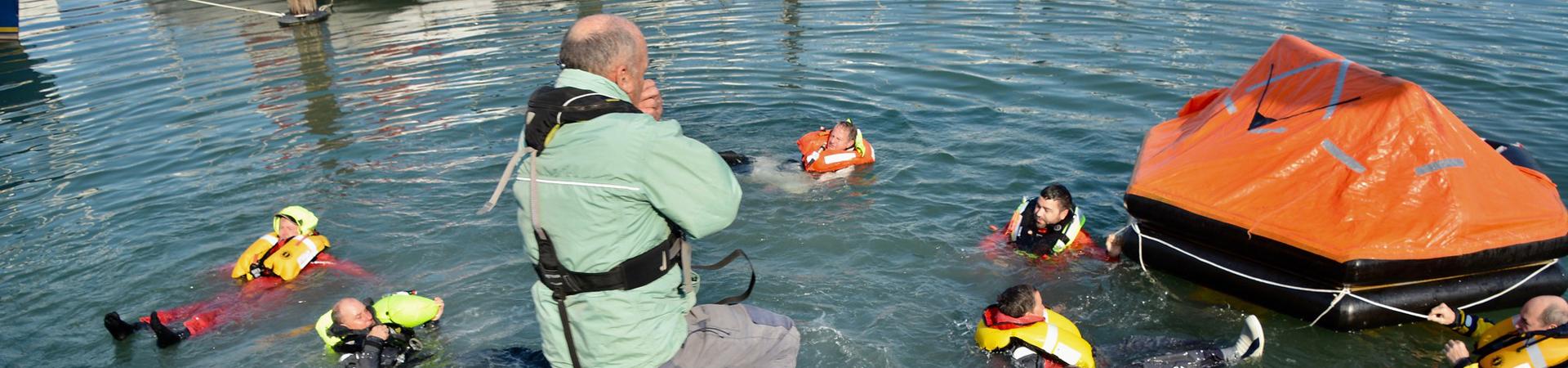
Life raft operation and in-the-water training
Flare use and training
Fire extinguisher training
Preventative maintenance checklists
Coast Guard communications
The following courses are also offered (as noted) at the SFYC, in conjunction with the Safety at Sea week.
CCA Safety for Cruising Couples - NOT CURRENTLY OFFERED
The course covers a range of essential safety practices, with emphasis on completing a safe voyage with a small crew or a less experienced first mate. Topics include Skipper and Crew Partnership, Position and Navigation, Communications in an Emergency and Dealing with Emergencies. Pre-course learning and documents will be sent out to registered persons a week before the course. For more, check out the CCA’s Course video
VHF Certification - NOT CURRENTLY OFFERED
- Sign up and take the online course here (Course fee payable to SeaRegs)
- Sign up to take the EXAM at SFYC at 6pm on Oct 21 here (registrant list)
- Syllabus
- Course Docs & Videos
The Short Range Certificate is the minimum qualification required by law to control the operation of VHF and VHF Digital Selective Calling (DSC) equipment fitted with a radio. This includes both fixed and hand held equipment using International channels outside US territorial waters.
A radio is an important piece of safety equipment on board and it is vital to understand the correct procedures. Unnecessary transmissions could block out a Mayday distress call. All new VHF sets are either fitted, or can be interfaced, with DSC allowing calls to specific vessels.
Course topics include:
- Basics of radio operation
- Correct frequencies (channels) to be used
- Distress, emergency and medical assistance procedures
- Making ship to shore telephone calls
- Digital Selective Calling (DSC) using simulators
- Global Maritime Distress and Safety System (GMDSS)
- Emergency Position Indicating Radio Beacons (EPIRB)
- Search and Rescue (SART)
The course will be taught using radio simulators.